How Brex runs 400+ deals a year with a two-person procurement team and got 170 days of work back
Hala Jalwan, Co-Founder & CEO, Rivio
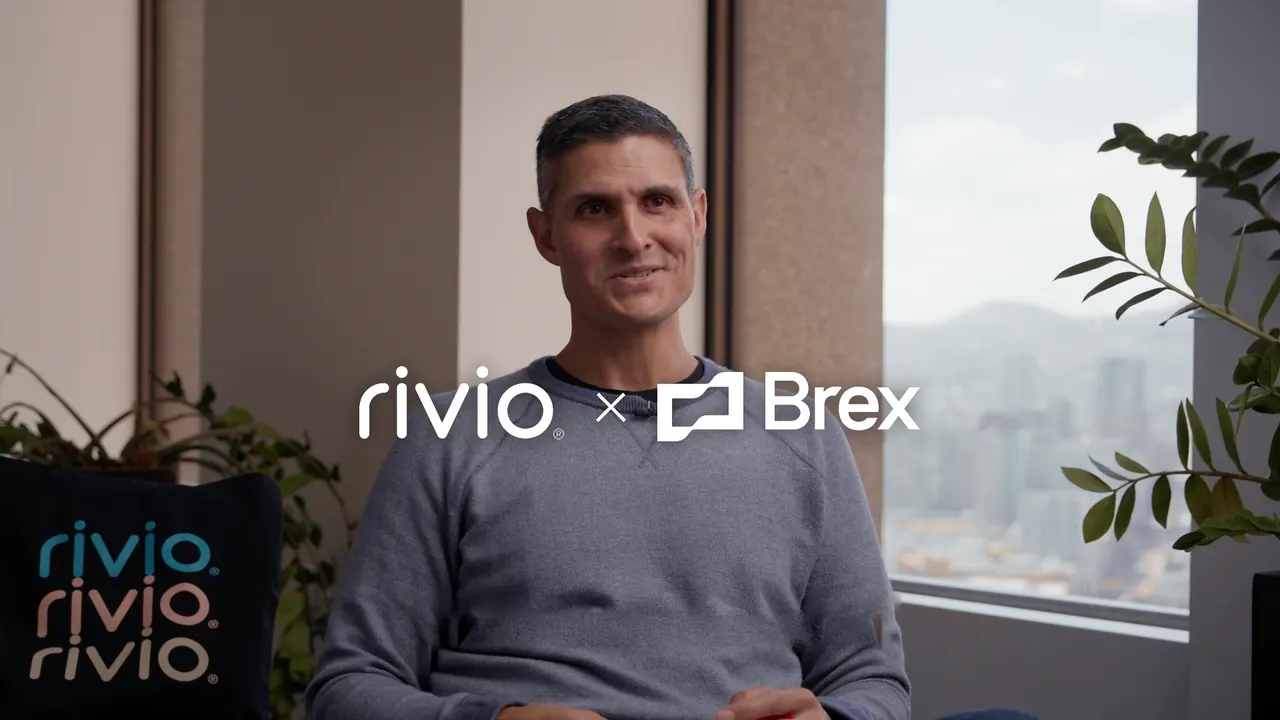
The challenge: enterprise volume, two people
Brex has a procurement team of two. Frank Rey de Perea, Head of Procurement, and David Keyser, Senior Procurement Manager, are responsible for more than 400 deals a year.
"That's a lot," Frank says. "It's a lot to work through that kind of volume."
Frank has led procurement at Procore, DocuSign, Electronic Arts and Ross Dress for Less, and he has seen the same problems everywhere. Data sits across multiple systems, each with its own record. Information is hard to find and rarely governed well. And the work only moves when someone pushes it.

At Brex, that showed up most in renewals. Each one started with the same checklist: open a Slack channel, ask the business owner whether they still need the tool, research alternative suppliers, and gather enough information just to process the intake request. Strategic work took even longer. A supplier analysis or category strategy meant days or weeks of research, or calls with peers to fill the gaps.
Hiring their way out wasn't the plan. "We need to think agent-first," Frank says, "and work through how we manage a procurement organization as lean as possible." For a small team, he adds, the productivity "is very high when you deploy this technology in the right way."
The solution: an agent that does the work
Brex brought in Sheldon, Rivio's AI procurement agent. Sheldon isn't a dashboard or a chatbot. It works across Brex's existing systems and does the work itself.
Renewals, end to end
Sheldon opens each renewal ahead of expiry in its own Slack channel, brings in the right business owner, summarizes the current contract and asks the questions a contracts manager would ask before procurement needs to step in. "It has gone from this very manual process to something that is now automated, and something that we don't have to manage at all," Frank says. The renewal calendar now maintains itself.
Negotiation, benchmarks and follow-ups
Sheldon emails vendors, benchmarks each offer against market pricing and pushes back on price increases, so Brex no longer accepts the yearly bump by default. It also handles follow-ups and inbox triage with stakeholders and vendors, so nothing waits on someone remembering to chase it.
Analysis on demand
Frank uses Sheldon for category strategy, supplier research and benchmarking. "I treat Sheldon like my right-hand person," he says. "It gives you the information within minutes and you're off and running."
Brex rolled Sheldon out the way you'd onboard a new hire. "It was always a crawl, walk, run methodology," Frank says. "Start small. Do this one task. Now go execute this thing." Brex's data was cleaned and connected first, which made the outputs reliable. "We've run enough tests at this point to say that we actually trust the output that we're receiving."
The results
About 1,330 hours returned to the team
That's roughly 170 working days, or three-quarters of a full-time role, for a team of two. About 725 hours came from the renewal workflow, 504 from analysis and 105 from price benchmarks. Rivio counts this as a floor, since detailed action tracking only began in mid-2026.
4.5x the request volume, with the same team
Sheldon has run 306 requests since August 2025. 91% of them were renewals handled from kickoff to close. Since automation expanded in April 2026, Brex's monthly request volume has grown 4.5x with the same two people.
About 8% better pricing on renewals
Sheldon flags price increases, benchmarks offers and reviews terms on renewals. When Sheldon negotiates directly with vendors, Brex sees about 8% in additional savings.
Weeks of work done in minutes
For an RFP, Frank got the research he needed "within minutes, rather than research that would have taken days, if not weeks." A SWOT analysis on a supplier base that "would have taken me weeks to produce" came back "90% of the way there" in a fraction of the time.
Value beyond procurement
Thirteen Brex employees have had more than 1,000 conversations with Sheldon on markets, vendors and contracts. When Brex's finance team used it for a budget-vs-actuals and variance analysis, "they had the answer within a minute, whereas before that would have taken them weeks," Frank says. "You'd see their eyes just light up."
"Ad hoc reporting, contract analysis, spend benchmarking," Frank says. "Those are hours in our day that we no longer have to deploy, because Sheldon is doing that work on our behalf."
What it means for Brex
The hours Sheldon returns go back into the work that only people can do: strategic deals, supplier relationships, risk and innovation. Roughly 80 to 90% of Brex's spend sits with a concentrated set of suppliers, and that's where Frank wants his team's attention. "Sheldon is part of that work at the strategic level," he says, "but Sheldon is also the amplifier on the lower end, to make sure that we get enough coverage and have enough spend under management."
It also changes what a small team can take on. Where a team might normally run 75 or 100 sourcing events, Sheldon lets them run more, or spend that time on work they could never get to.
Asked what would happen without it, Frank doesn't hesitate. "I would go kicking and screaming, because I don't know how we would operate. We would have to literally rewind five years of productivity gains and revert to basically just another manual process."
What's next
Brex has already tested Sheldon running full supplier negotiations, from pricing through escalation to the final result, and is handing it more control as trust grows. Frank sees procurement becoming a mix of people and agents, with Sheldon taking on more of the work over time.
"It's hard to envision a world without an agentic workforce, without Sheldon, in our ecosystem," he says. "The sky's the limit."
Back to blog